Elemental Rhythm Breathwork
Once feeling called to breathwork, the journey led me to Giovanni Bartolomeo and Elemental Rhythm Breathwork (ERB).
The training began in Sedona. Thirty of us looking to become facilitators met up for an initial training workshop, surrounded by the most incredible landscape.
It felt like I had found my Soul family.
There are numerous organizations that teach breathwork, and each has its own advantages. ERB is unique in that the facilitators create their own playlists, their own Breathwork sessions, from scratch.
We are not just facilitators as ERB. We are creators.
So what is breathwork?
Breathwork has long been a part of other modalities, including yoga and meditation. But it was not until the 1970s that it began to become something on its own. In more recent years, it has become a practice in itself. I discovered the power of breathwork 20+ years ago following a back injury. For 18 months, I tried everything - yoga, physical therapy, massages, chiropractors, back specialists, surgeons, but nothing helped.
Then one day, a CD arrived from Ananda, that included Yogananda's Energizing Exercises. These are gentle and moderate movements accompanied with breath, similar to what is found in Qigong, Tai Chi, Kundalini Yoga and many meditation practices. Within a week my back started cracking and healing. At this point it became obvious that we in the west do not know how to breath, hence we are rife with hypertension, anxiety, heart disease. And back problems!
So I was delighted with the opportunity to dive into a practice solely comprised of the breathing techniques found across many disciplines!
Do note that Breathwork as it exists today does not require any spiritual beliefs. It just requires belief in yourself.
Breathwork is the practice of conscious, patterned breathing, which has been shown to take us into altered states of being and breaththrough experiences. A breaththrough experience is when we touch a memory, a trauma, from our past that has been stored in our subconsciousness and body, and has from there, controls our thinking and perceptions. In addition, Breathwork heals and regulates our nervous system. So we can use Breathwork like EMDR, as a tool for self therapy. And we can use it to calm and heal our nervous system.
Elemental's own unique take on this is to use a constantly changing breathing rhythms, from less intense to more intense, through cycles of different breaths. This creates what is called Neural Confusion, similar to muscle confusion in some workout modalities. By changing the rhythm, the nervous system never fully adapts, which leads to deeper physiological and psychological effects. And it is done in stages, rounds, each round taking us into deeper breathing and greater intensity. This is called Triad Activation. We activate in steps. The intent is to carry us into that state right before sleep or right after sleep, the twilight mode where the brain state transitions from alpha to theta waves, also known as the "hypnagogic state" or stage 1 sleep. In this light sleep phase, consciousness fades, allowing for vivid imagery, deep relaxation, and creative, intuitive thoughts, and we use this to access our subconscious.
Elemental has two basic Breathwork techniques. The first is the Breakthrough Experience, which is described above. The other is the Flow Experience, which are shorter sessions that carry us into a relaxed state for clarity and healing of the nervous system.
What is Breathwork?
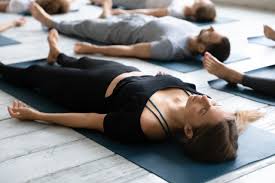
Our Sacred Journey into breathwork is rooted in changes in our breathing patterns, to create the 'Neural Confusion', with each cycle taking us into deepening states.
But first, we in the west must learn proper breathing - or taking deep breaths first expanding our belly and then filling our lungs. Often it is suggested that we put one hand on the belly, and one had on the chest, and breathing deeply into the belly, feeling the belly rise, and then filling our lungs, as our chest expands as one long inhale, and then passively, yet fully exhaling, expending all air from our lungs.
For Breaththrough Experiences, the following breaths are commonly used:
Earth Breath: Full and slow breaths, 4 seconds in and 4 seconds out.
Water Breath: Full and quicker breaths, 2 seconds in and 2 seconds out.
Air Breath: Full and even quicker breaths, 1 count in and 1 count out.
Fire Breath: Full but rapid breathing, as quick as possible or even panting like a dog.
Breath Holds: Either on full lungs or empty, usually between 30 and 60 seconds.


For Flow Experiences, the following breaths are commonly used:
Earth Breath: Full and slow breaths, 4 seconds in and 4 seconds out.
Water Breath: Full, quicker breaths, 2 second in and 4 seconds out.
Extended Exhale: Extended exhale to an 8 count with an earth breath or a 4 count with a water breath.
Double Inhale: Similar to a water breath, except there are two distinct inhales.
Breath Holds: Either on full lungs or empty, usually between 30 and 60 seconds.


Learning to Breathe
Breathwork FAQs
There are some important considerations before starting this Sacred Journey
No specific spiritual beliefs are necessary. Just belief in one's self.
There are contraindications that might prevent one's participation in Breathwork. It is advised if any of these apply to you, that you check with your practitioner before taking up Breathwork.
Cardiovascular Conditions: History of heart attack, stroke, angina, or uncontrolled high blood pressure. These practices can increase heart rate and stress the circulatory system.
Eye Issues: Glaucoma or a detached retina, as intense breathing can increase intraocular pressure.
Aneurysms: Personal or immediate family history of brain or abdominal aneurysms.
Seizure Disorders: Epilepsy or a history of seizures, as altered oxygen/CO2 levels may trigger an episode.
Respiratory Issues: Severe asthma (clients should always have an inhaler present) or chronic obstructive pulmonary disease (COPD).
Pregnancy: Often discouraged due to potential overstimulation, hormonal shifts, or the risk of triggering contractions, though some gentle practices may be allowed under medical guidance.
Recent Surgery or Injury: Major surgery or physical injuries that are not fully healed, which could be aggravated by intense movement or internal pressure.
Severe Trauma Experiences: Oftentimes, when we have experienced severe trauma, it is advised that one does breathwork with a license therapists who will be present when trauma is brought to the surface for healing.
Breathwork Journeys

Introduction to Breathwork

Ganesha Flow Journey
Music by Mose and Franko Heke and Friends
This journey is about 35 minutes long, but please watch the Introduction to Breathwork video before embarking on any Breathwork Journey.